

For decades, physical product development moved at an unforgiving, glacial pace. An engineering team would spend months refining computer-aided design models, commit hundreds of thousands of dollars to dedicated steel tooling, and wait up to four months just to hold the first physical sample. If an interface was misaligned, a thermal pathway choked, or a structural wall bowed under stress, the entire cycle reset. The penalty for iteration was so steep that conservative, incremental engineering became the default survival strategy.
Today, that rigid paradigm is obsolete. Rapid prototyping has evolved from an aesthetic validation tool into the primary engine of industrial innovation. By collapsing the interval between concept and physical verification from months into hours, modern prototyping methods allow industrial manufacturers to treat hardware development with the velocity and experimentation once reserved exclusively for software. The result is a fundamental shift in how physical products are engineered, tested, and scaled.
The Shift from Form-Check Models to Functional Performance
Early rapid prototyping was almost entirely visual. Designers used basic stereolithography or plaster-based printers to check ergonomics, confirm clearances, and present scale mockups to executive boards. These models were fragile and chemically unstable; you could look at them, but putting them through mechanical stress or heat cycles was out of the question.
The current generation of prototyping technologies operates on an entirely different level of capability. Contemporary platforms process aerospace-grade titanium, high-temperature nickel superalloys, carbon-reinforced thermoplastics, and engineering polymers like PEEK and Ultem. Instead of merely demonstrating form, modern prototypes undergo severe mechanical testing, dynamic fluid flow analysis, and rigorous thermal cycling.
This transition to functional prototyping eliminates the historical divide between the prototype phase and final manufacturing. When an early prototype exhibits the same tensile strength, chemical resistance, and fatigue behavior as a final production part, engineers can validate failure modes immediately. Issues that once surfaced during pre-production pilot runs are now diagnosed and solved during early sprint cycles.
Foundational Technologies Powering Prototyping Agility
The modern prototyping floor is neither an isolated machine shop nor a desktop 3D printer farm. It is an integrated, multi-disciplinary environment where complementary technologies address distinct engineering challenges.
Industrial Additive Manufacturing
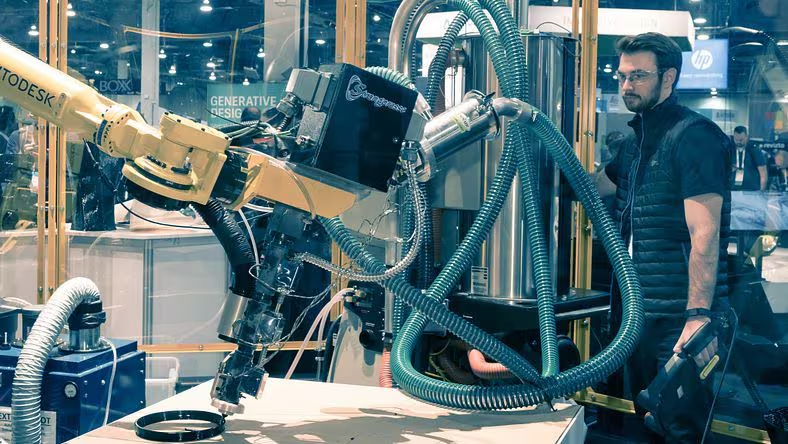
Additive manufacturing remains the most versatile pillar of rapid prototyping, largely because it removes geometric constraints that limit conventional tool paths. Technologies like Selective Laser Sintering (SLS) and Direct Metal Laser Sintering (DMLS) construct complex geometries by fusing fine powder layers with precision lasers.
This enables generative design and topological optimization, allowing engineers to place material strictly where mechanical loads demand it. Internal cooling channels, complex fluid manifolds, and lightweight cellular lattice structures—previously impossible to fabricate via casting or subtractive cutting—can be printed, measured, and revised within forty-eight hours.
Automated Subtractive and Hybrid Machining
Additive methods get the bulk of popular attention, but subtractive machining has undergone its own quiet revolution. Modern high-speed five-axis CNC machining centers now integrate with automated tool changers, digital probing, and cloud-driven toolpath generation.
When a design demands isotropic mechanical integrity, micron-level dimensional tolerances, or specific surface finishes, automated subtractive prototyping delivers parts cut directly from production-grade billet stock. Hybrid systems combine laser deposition with automated milling in the same build volume, adding material where needed and immediately machining critical interfaces to mirror-smooth finishes.
Rapid Tooling and Bridge Manufacturing
Between one-off prototypes and high-volume mass production lies the most dangerous phase of industrial commercialization: the ramp-up. Rapid tooling bridges this divide by using hybrid molds, soft aluminum cores, or 3D-printed tool inserts for low-volume injection molding, die casting, and sheet metal stamping.
Instead of waiting several months and investing massive capital into hardened production tooling, manufacturers can machine aluminum tooling in days. This allows them to produce hundreds or thousands of parts in final production resins, validating manufacturing repeatability, securing regulatory certifications, and generating early revenue while permanent tooling is being cut.
High-Fidelity Virtual Prototyping
Physical prototypes yield the ultimate validation, but virtual prototyping ensures that physical builds count. Advanced multiphysics simulation, finite element analysis, and computational fluid dynamics allow engineers to test virtual assemblies against mechanical shock, electromagnetic interference, and thermal dissipation before sending files to a machine. By pairing virtual iteration with physical production, teams catch baseline structural errors digitally, reserving physical prototyping builds for empirical validation and regulatory verification.
Cross-Sector Impact: Aerospace, Automotive, and Medical Devices
The industrial impacts of rapid prototyping are clearest where failure carries high financial and human costs.
In aerospace and defense, lightweighting directly dictates operating range and payload capacity. Using metal additive prototyping, propulsion engineers can consolidate complex rocket engines and turbine fuel manifolds from dozens of individually brazed fittings into a single consolidated component. Prototyping these monolithic parts eliminates assembly joints, reduces inspection overhead, and cuts weight by thirty to forty percent.
In the automotive sector, the global transition toward electric vehicles has created an intense engineering arms race. Prototyping platforms allow automakers to rapidly develop battery enclosures, optimize liquid cooling jackets, and iterate structural crash members. Thermal management systems that once required multiple vendor iterations are refined through rapid, iterative testing cycles, cutting vehicle development timelines down dramatically.
In medical technology, rapid prototyping is driving both operational speed and patient customization. From patient-matched cranial implants to orthotic guides and intricate microfluidic diagnostic chips, prototyping technologies enable manufacturers to move from scan data to physical, sterilizable hardware in hours. Surgical teams and device manufacturers can physically evaluate device ergonomics and surgical cutting guides before initiating formal clinical trials.
De-risking Capital and Redefining Supply Chain Strategy
Beyond engineering speed, rapid prototyping serves as a strategic economic hedge against capital expenditure risk.
Committing to permanent, hardened steel tooling is traditionally the most hazardous milestone of any physical product launch. Tooling modifications after steel is cut require expensive electrical discharge machining or scrapping the entire mold block. Rapid prototyping allows companies to achieve high confidence in product-market fit and manufacturing tolerances before making irreversible capital commitments.
Furthermore, these technologies are transforming how organizations think about supply chain resilience. Decentralized digital inventories allow companies to store parts as CAD files rather than holding depreciating physical stock in warehouses. When a replacement component, customized bracket, or maintenance fixture is needed on a factory floor, it can be fabricated on-site or through a local service bureau. This mitigates exposure to international shipping bottlenecks, reduces inventory holding costs, and minimizes operational downtime.
Cultivating an Agile Hardware Culture
Adopting rapid prototyping is not solely a matter of purchasing advanced equipment; it requires an organizational shift in engineering culture.
Traditional engineering organizations rely on rigid stage-gate reviews designed to minimize the cost of physical mistakes. In contrast, an agile hardware culture embraces rapid, controlled physical testing to surface failure points early. Engineers are encouraged to test edge cases, validate unconventional geometries, and iterate aggressively while changes are inexpensive and fast.
To capitalize on this, design teams must be trained in Design for Additive Manufacturing (DfAM) principles. Designing for modern additive or hybrid systems requires unlearning subtractive constraints like draft angles, parting lines, and constant wall thicknesses. When engineers design with additive freedom from day one, products exit the prototyping cycle lighter, more integrated, and significantly less expensive to assemble at scale.
Industrial innovation is no longer governed by who can forecast design perfection on a screen, but by who can cycle through iterations and learn from physical empirical data the fastest. Rapid prototyping technologies have leveled the playing field, allowing forward-thinking manufacturers to out-innovate, out-test, and out-deliver competitors tied to obsolete development cycles.
Comments are closed.